
The One-Pager: Power and Beauty
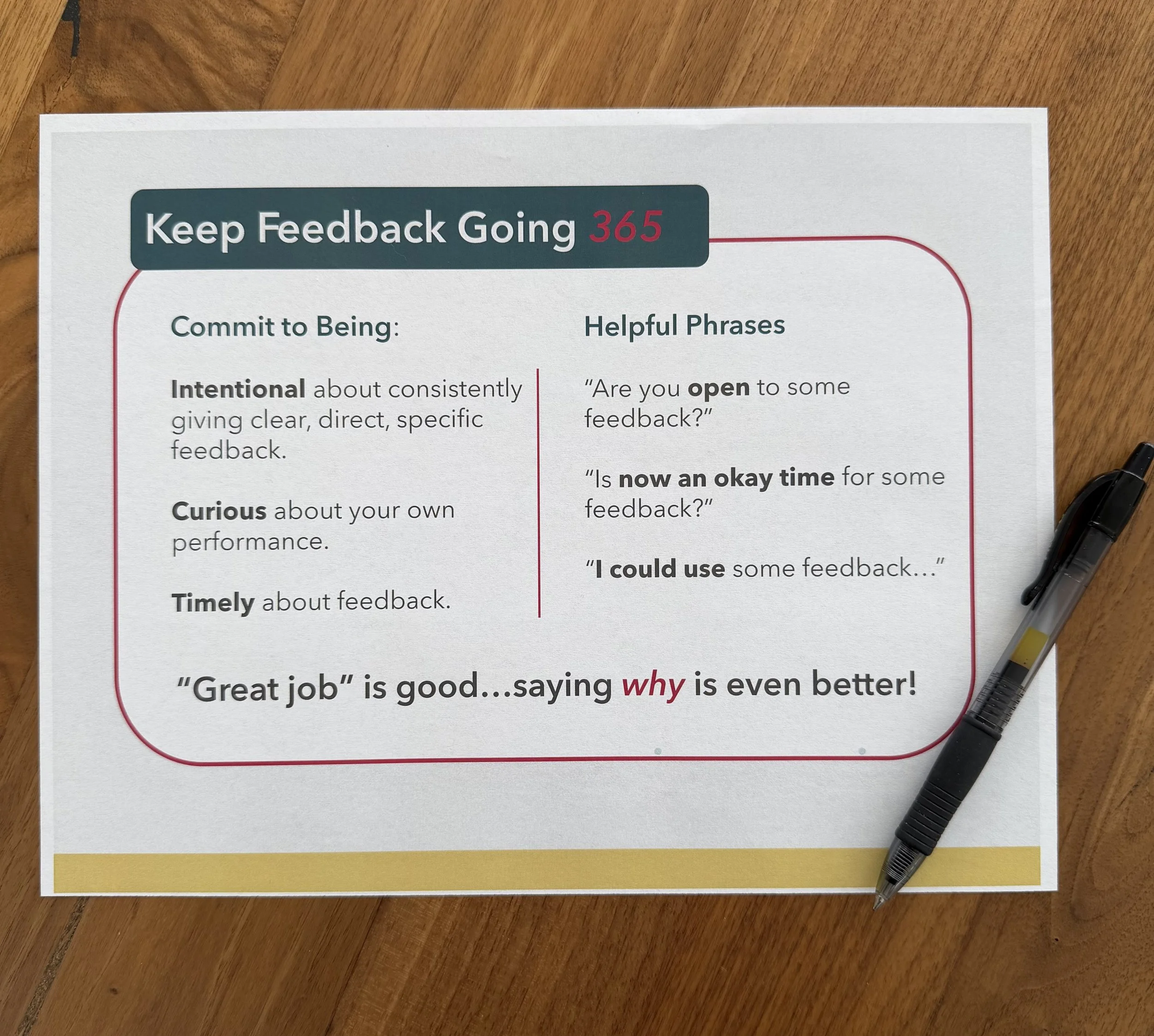
Post training: a single, intentional page to inform and guide a team in feedback habits and prompts
I learned the discipline of the one-pager years ago as a Chief Talent Officer, when my then CEO challenged me to make even the most important company-wide communications fit on a single page. It wasn’t intuitive—it took real work. And it was transformative. I use that discipline today with clients.
Ever leave a meeting or training session thinking: That was good…but now what?
In my work, one-pagers are the primary leave-behind. Not a full slide deck. Not 25 pages of content. A single, intentional page. Handing over an entire deck asks people to reprocess the session and sort through what they think matters. It takes time. The deck often gets set aside for when there’s “more time”—which runs the risk of being never.
When done well, one-pagers are both power and beauty.
The power is the discipline: deciding what truly matters, what decisions or behaviors the work should inform, and what can wait. The beauty is design—making the content more compelling and far more likely to be read, remembered, and used.
Back when I was a CTO, I relied on one-pagers in many scenarios:
After all-company meetings and trainings—to translate ideas into action and make it easier for leaders to reinforce key messages with their teams.
To introduce complex topics to broad, multi-level audiences—so people could quickly see what applied to them, with embedded links for deeper dives if needed.
To share engagement survey results with teams—providing a clear, accessible view while reserving deeper analysis for senior leaders.
A one-pager respects people’s time and attention. It emphasizes guidance over repetition, clarity over volume.